

In modern electrical systems,reliable and organized wiring is essential for safety and efficiency.A combination terminal block,also known as a modular terminal block,is designed to simplify complex connections by integrating multiple wiring functions into a single,compact unit.As a versatile terminal block connector,it is widely used in control panels,industrial automation,and power distribution systems.
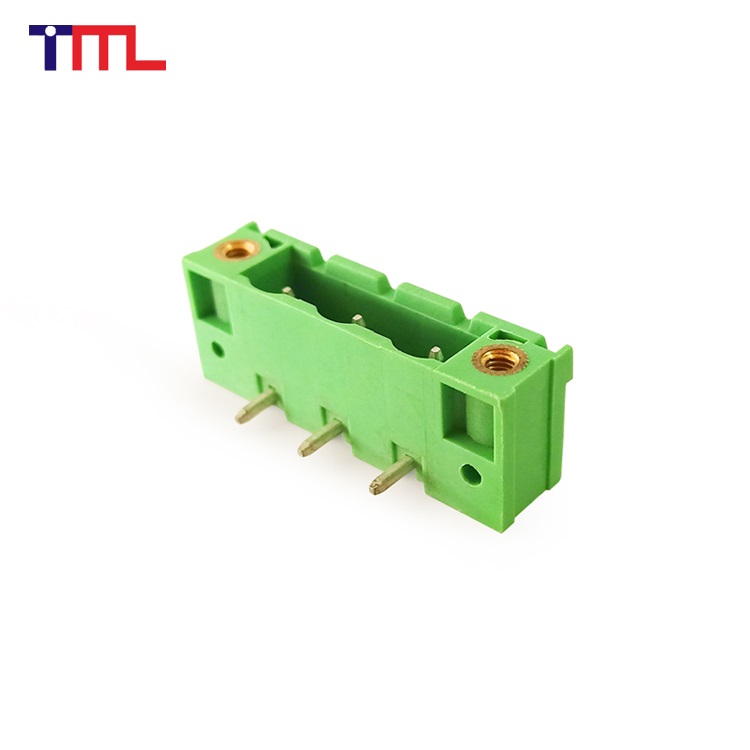
At its core,a composite terminal block works by providing a secure point where electrical wires can be connected,distributed,or terminated.Unlike traditional single-function connectors,a combination terminal block can include multiple connection types within one assembly.These may consist of feed-through connections,grounding terminals,fuse holders,or disconnect modules.This modular approach allows engineers to customize the wiring layout according to specific application requirements.
The working mechanism of a modular terminal block is based on conductive metal parts and insulated housing.Inside the terminal block connector,a metal conductor—usually made of copper or a copper alloy—creates a path for electrical current.Wires are inserted into designated slots and secured using screws,spring clamps,or push-in mechanisms.Once tightened or locked in place,the wire establishes a stable electrical connection,ensuring efficient current flow through the composite terminal block.
One of the defining features of a combination terminal block is its modular design.Each section of the modular terminal block can be assembled or removed independently,allowing users to build a customized configuration.For example,a system may combine power distribution terminals with signal terminals in a single terminal block connector.This flexibility not only saves space but also improves wiring organization and simplifies maintenance.
Another important aspect of how a composite terminal block works is its insulation and safety design.The outer housing is typically made from high-quality,flame-retardant materials that prevent electrical leakage and protect users from accidental contact.The internal structure of the combination terminal block ensures that each connection point is isolated,reducing the risk of short circuits.This makes the modular terminal block suitable for high-reliability applications in industrial environments.
Installation is also straightforward.Most terminal block connector systems are designed for mounting on DIN rails,allowing quick and secure integration into electrical panels.Once installed,wires can be easily connected or adjusted without requiring complex tools.The modular nature of the composite terminal block also makes it easier to expand or modify the system as needed,which is particularly useful in evolving industrial setups.
In addition to functionality,durability is a key advantage.A high-quality modular terminal block is designed to withstand vibration,temperature changes,and long-term use.The robust construction of the combination terminal block ensures consistent performance,even in demanding conditions.This reliability is crucial for maintaining stable electrical connections in critical systems.
In conclusion,a composite terminal block works by combining multiple connection functions into a single,organized unit.Through its conductive components,insulated housing,and flexible modular design,a combination terminal block or modular terminal block provides a secure and efficient solution for electrical wiring.As a highly adaptable terminal block connector,it plays a vital role in improving system reliability,simplifying installation,and supporting modern electrical engineering needs.