

In modern electrical systems,especially those involving power distribution and industrial equipment,the need to safely manage large amounts of electrical current is critical.A high power terminal block,also referred to as a heavy duty terminal block or high amperage terminal block,is specifically designed to provide secure,stable,and efficient electrical connections under high-load conditions.
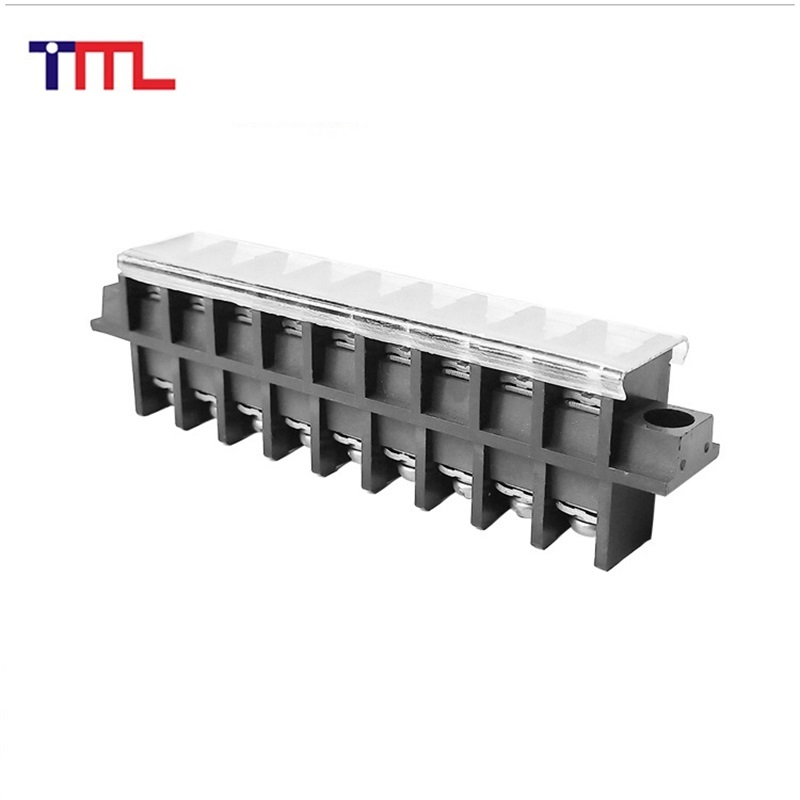
At a fundamental level,high current terminal blocks function as connection points where electrical conductors are joined or terminated.These devices are engineered with highly conductive materials,typically copper or copper alloys,to minimize resistance and ensure efficient current flow.When a wire is inserted into a high power terminal block,it is secured using a clamping mechanism such as a screw,spring clamp,or bolt connection.This tight mechanical bond ensures that the electrical connection remains stable even when carrying high currents.
The internal structure of a heavy duty terminal block is designed to handle significant electrical loads without overheating.One of the key working principles is the reduction of contact resistance.By maximizing the contact area between the conductor and the terminal,a high amperage terminal block allows electricity to pass through with minimal energy loss.This not only improves efficiency but also reduces the risk of heat buildup,which is essential for maintaining safety in high-power applications.
Another important aspect of how high current terminal blocks work is their insulation and protective housing.The outer casing is typically made from high-performance,flame-retardant materials that can withstand elevated temperatures and prevent electrical leakage.This ensures that the high power terminal block operates safely even in demanding environments such as industrial control panels,power distribution systems,and heavy machinery.
In addition to electrical performance,mechanical strength is a defining feature of a heavy duty terminal block.These components are built to endure vibration,mechanical stress,and long-term usage.The robust design of a high amperage terminal block ensures that the connection remains secure,even in environments where equipment is subject to constant movement or shock.This reliability is crucial in industries such as manufacturing,energy,and transportation.
Installation and maintenance are also key considerations.Most high current terminal blocks are designed for easy mounting,often on DIN rails or panel boards.Once installed,wires can be connected or replaced without extensive disassembly.This user-friendly design makes the high power terminal block an efficient solution for both initial setup and ongoing maintenance.Additionally,the modular nature of some heavy duty terminal block systems allows for easy expansion or reconfiguration as system requirements change.
Another advantage of a high amperage terminal block is its versatility.It can be used in a wide range of applications,from renewable energy systems such as solar and wind power to industrial automation and large-scale electrical installations.The ability of high current terminal blocks to handle high loads while maintaining stable performance makes them indispensable in modern electrical engineering.
In conclusion,high current terminal blocks work by combining high-conductivity materials,secure mechanical connections,and robust insulation to safely manage large electrical currents.Whether referred to as a high power terminal block,heavy duty terminal block,or high amperage terminal block,these components play a vital role in ensuring efficient and reliable power distribution.Their durability,safety features,and ease of use make them an essential part of high-performance electrical systems.