

Understanding the materials used in a power terminal block is essential for ensuring reliable electrical performance and long-term durability.In industrial and commercial applications,power terminal blocks are responsible for connecting and distributing electrical power safely.The choice of materials directly affects conductivity,insulation,heat resistance,and overall system stability.
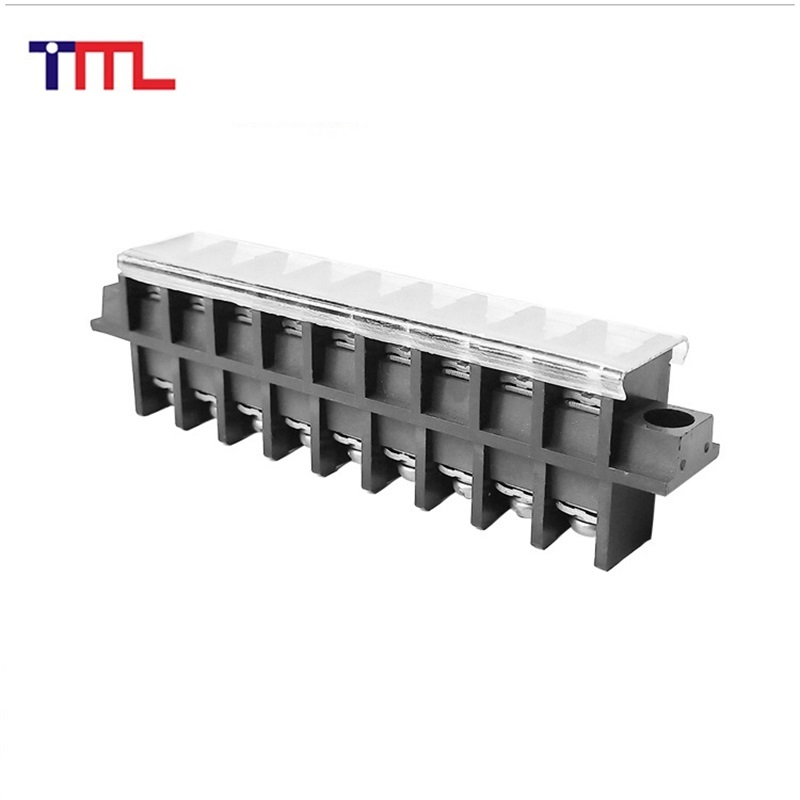
One of the most critical materials in any electrical terminal block is the conductive metal used for the current-carrying components.Copper is the most commonly used material due to its excellent electrical conductivity and low resistance.In many high power terminal block designs,copper is often plated with tin or nickel to enhance corrosion resistance and improve long-term reliability.Brass is another material sometimes used,offering a balance between strength and conductivity.
Equally important is the insulating material that surrounds the conductive parts.High-quality power terminal blocks typically use thermoplastics such as polyamide(PA66),polycarbonate(PC),or polypropylene(PP).These materials provide strong electrical insulation,flame resistance,and mechanical durability.In demanding environments,a high power terminal block may use advanced materials that can withstand high temperatures and harsh conditions without degrading.
Another key component in a power terminal block is the hardware used for connections,such as screws and clamps.These parts are usually made from steel or stainless steel to ensure strength and resistance to wear.In some electrical terminal block designs,screws are treated with anti-corrosion coatings to maintain performance over time,especially in humid or industrial environments.
For applications involving high current loads,the materials must also handle heat effectively.A well-designed high power terminal block uses materials that can dissipate heat efficiently,reducing the risk of overheating.This is particularly important in power distribution systems,where power terminal blocks are subjected to continuous electrical loads.
In addition to performance,safety is a major consideration.The insulating materials used in a power terminal block are often tested to meet international safety standards,ensuring they can prevent electrical leakage and resist flame propagation.This makes the electrical terminal block a reliable component in both low-and high-voltage systems.
In conclusion,the materials used in power terminal blocks—including conductive metals like copper,durable insulating plastics,and strong connection hardware—are carefully selected to ensure efficiency,safety,and longevity.Choosing a high-quality power terminal block or high power terminal block with the right material composition is essential for achieving stable and secure electrical connections in any application.