

Proper installation of electrical components is essential for ensuring safety,stability,and long-term performance in industrial wiring systems.Among the most commonly used components in control panels and electrical enclosures is the DIN rail terminal block,which provides a secure and organized way to connect multiple wires.
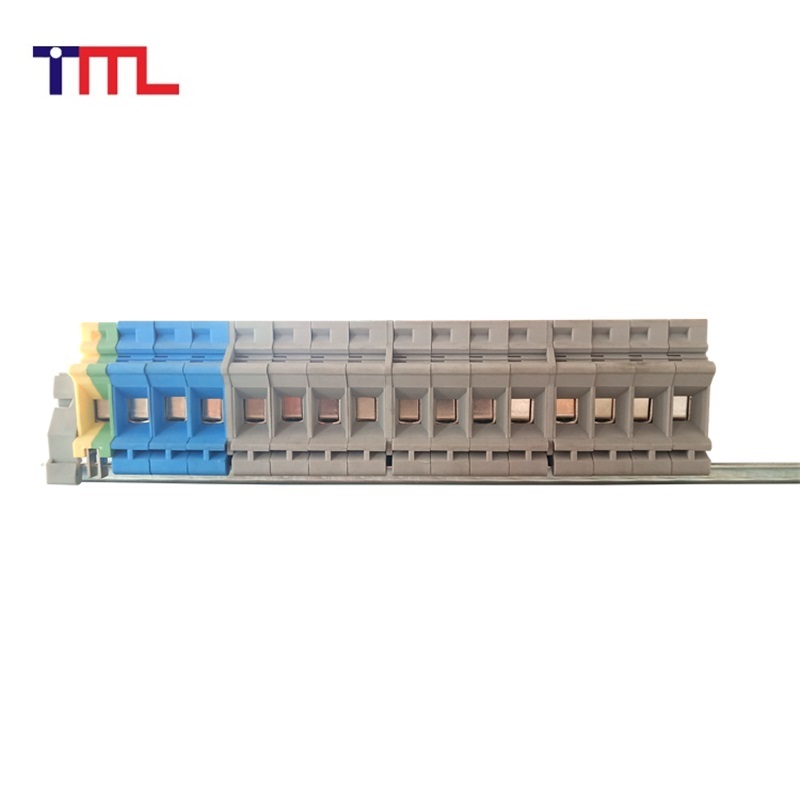
Understanding DIN Rail Terminal Blocks
A din rail electrical terminal block is a modular connection device mounted directly onto a standardized DIN rail.It is widely used in control cabinets,automation systems,and power distribution panels to simplify wiring and improve system organization.
As a key terminal block din rail solution,it allows engineers to connect,disconnect,and manage electrical circuits efficiently without compromising safety.
Step 1:Prepare the DIN Rail and Layout
Before installation,ensure the DIN rail is properly fixed inside the electrical enclosure.Check that there is enough space for all components,including the din rail connector and other terminal accessories.
Planning the layout in advance helps avoid overcrowding and ensures clear separation between power and signal wiring.
Step 2:Mount the DIN Rail Terminal Block
To install a DIN rail terminal block,align the bottom groove of the terminal block with the edge of the DIN rail.Apply gentle pressure until it clicks into place.Most modern terminal blocks are designed with a snap-on mechanism,making installation quick and tool-free.
Make sure each din rail electrical terminal block is securely attached to prevent movement caused by vibration or operational stress.
Step 3:Connect the Wires
Once mounted,insert the stripped wire ends into the corresponding ports of the terminal block.Depending on the type(screw,spring,or push-in),tighten or secure the connection accordingly.
A properly installed terminal block din rail system ensures strong electrical contact,reducing the risk of loose wiring or short circuits.
Step 4:Organize and Label Connections
For better maintenance and troubleshooting,label each connection point.Using a structured din rail connector system helps engineers quickly identify circuits during inspection or repair work.
Proper cable management also improves airflow inside the control panel,reducing heat buildup.
Step 5:Final Inspection and Testing
After installation,carefully inspect all connections to ensure they are secure.Perform electrical testing to verify continuity and insulation resistance.A correctly installed DIN rail terminal block system should provide stable performance without overheating or signal loss.
Conclusion
Installing a din rail electrical terminal block correctly is essential for safe and efficient electrical system operation.By following proper mounting,wiring,and inspection procedures,users can ensure reliable performance of their terminal block din rail system.Whether used in industrial automation or power distribution,a well-installed din rail connector enhances both safety and long-term durability.