

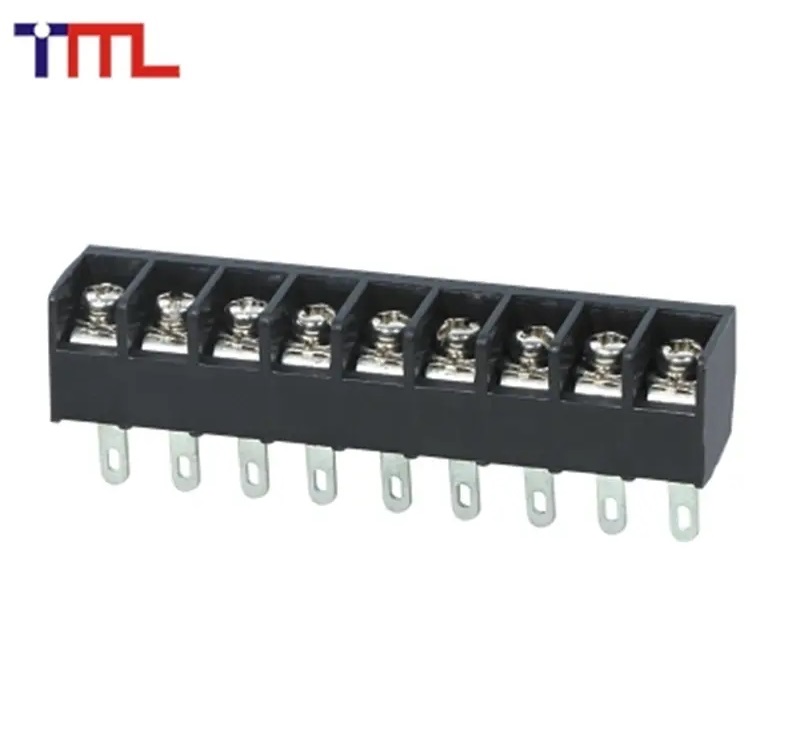
1. What Is a Terminal Block Connector?
A terminal block connector is a modular device used to secure and connect two or more electrical wires. Unlike soldered connections, terminal blocks allow wires to be easily inserted, removed, or replaced without the need for permanent bonding. This makes them ideal for prototyping, maintenance, and industrial automation.
Terminal blocks can come in different forms:
-
PCB Terminal Block: Designed to mount directly on printed circuit boards, providing a compact and organized solution for connecting multiple wires.
-
Terminal Strip Connector: Linear or modular strips that allow several wires to be connected in sequence, often used in control panels and distribution boxes.
-
Standard terminal block connectors: May be screw-type, spring-clamp, or push-in type, depending on the application.
2. Common Applications of Terminal Blocks
Terminal block connectors are widely used in various industries and settings:
-
Industrial Equipment: Connect sensors, relays, and motors safely.
-
PCB Assemblies: PCB terminal blocks allow clean and reliable wire connections for electronic circuits.
-
Power Distribution: Use terminal strip connectors for organizing and distributing electricity in panels.
-
Home Electrical Wiring: Simple DIY projects and small appliances often use modular terminal blocks for safe wire management.
-
Automation Systems: Efficiently connect multiple control wires in machinery or robotics.
3. Types of Terminal Block Connectors
3.1 Screw Terminal Block
Screw terminals are the most common type. They feature a metal clamp tightened by a screw to hold the wire firmly. Advantages include durability, strong connection, and ability to handle higher currents.
3.2 Spring-Clamp Terminal Block
These use a spring mechanism to hold wires without screws. They are faster to install and ideal for vibration-prone environments.
3.3 Push-In Terminal Block
Push-in connectors allow wires to be inserted directly into the terminal without tools. They provide secure connections and simplify installation, especially for repetitive tasks.
3.4 PCB Terminal Block
Specially designed for printed circuit boards, pcb terminal blocks allow wires to connect to the PCB without soldering directly. They come in through-hole or surface-mount styles.
3.5 Terminal Strip Connector
These linear connectors, or terminal strip connectors, allow multiple wires to be organized neatly in a row. They are commonly mounted in electrical panels for structured wiring.
4. How to Use a Terminal Block Connector
Proper installation ensures safety, reliability, and longevity. Here’s a step-by-step guide:
Step 1: Prepare the Wires
-
Strip the insulation of each wire by about 5–10 mm, exposing clean copper.
-
Twist stranded wires to prevent fraying.
Step 2: Select the Appropriate Terminal Block
-
Choose a terminal block connector suitable for your wire gauge and application.
-
For PCB connections, use the corresponding pcb terminal block.
-
For multiple wires, consider a terminal strip connector.
Step 3: Insert the Wire
-
For screw-type blocks, insert the stripped wire into the terminal hole.
-
For spring-clamp or push-in types, push the wire directly into the slot until secure.
Step 4: Secure the Connection
-
Tighten screws using a screwdriver (for screw terminals).
-
Ensure that the wire is held firmly and does not move.
-
Avoid over-tightening to prevent wire damage.
Step 5: Inspect the Connection
-
Pull gently on the wire to confirm it is secure.
-
Check for exposed copper outside the terminal block.
-
Ensure all wires are correctly connected according to circuit diagrams.
Step 6: Final Installation
-
Mount the terminal block on a panel or PCB as required.
-
Connect all wires and verify continuity using a multimeter.
-
For industrial or high-current setups, double-check torque specifications.
5. Best Practices and Tips
-
Always use the correct wire size for the terminal block.
-
Label wires when using terminal strip connectors to avoid confusion.
-
Avoid combining wires of significantly different gauges in one terminal.
-
For PCB installations, make sure the pcb terminal block matches the pad layout.
-
Periodically inspect connections, especially in high-vibration or industrial environments.
-
Use insulated tools to prevent accidental short circuits.
6. Advantages of Using Terminal Blocks
-
Ease of Installation: Quick and tool-friendly connection.
-
Flexibility: Wires can be easily replaced or reconfigured.
-
Safety: Secure connections reduce the risk of short circuits.
-
Organization: Keep wiring neat with terminal strip connectors.
-
Reliability: Strong electrical contact with minimal resistance.
-
Versatility: Suitable for PCBs, control panels, industrial equipment, and DIY projects.
7. Common Mistakes to Avoid
-
Overstripping wires and exposing too much copper.
-
Loose connections that may cause arcing or heating.
-
Mixing stranded and solid wires improperly.
-
Using a terminal block with incompatible wire gauge or current rating.
-
Ignoring torque specifications for screw-type terminals.
Conclusion
A terminal block connector is an indispensable component for safe, organized, and efficient electrical connections. From pcb terminal blocks in electronic circuits to terminal strip connectors in control panels, these devices simplify wiring and maintenance while ensuring reliability. By understanding how to use a terminal block connector, selecting the right type for your project, and following best practices, you can enhance safety, performance, and longevity in any electrical or electronics application.
Whether you are a hobbyist building a PCB, an electrician wiring a control panel, or an engineer designing industrial equipment, terminal blocks provide a flexible, reliable, and professional solution for connecting wires safely.