

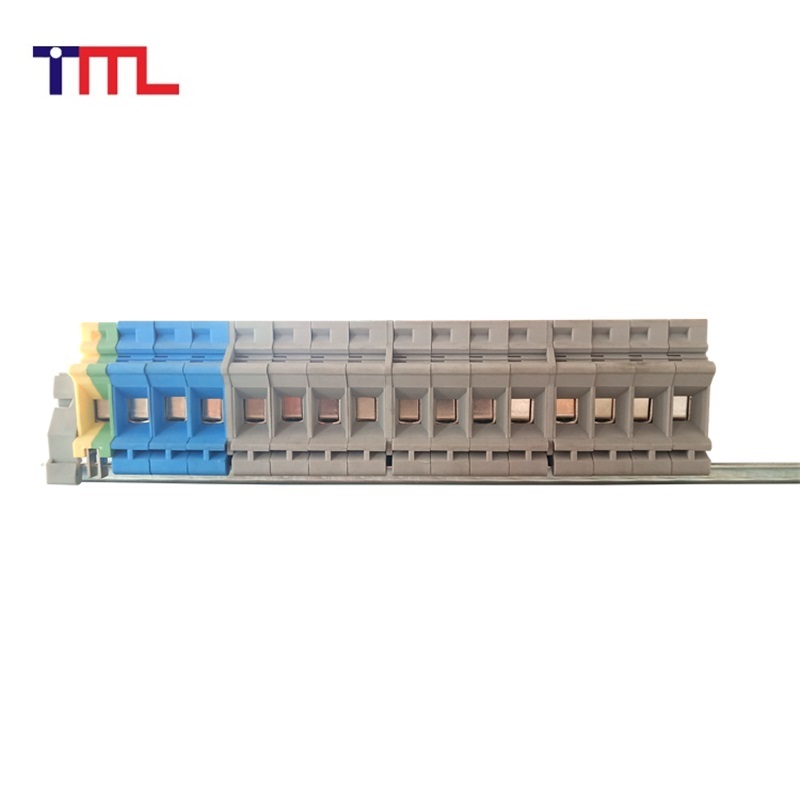
What is a DIN Rail Terminal Block?
A DIN rail terminal block is an electrical connector that attaches to a standard DIN rail—a metal rail commonly used in industrial control panels. These terminal blocks allow for easy connection of wires and help organize complex wiring systems. There are various types, including standard DIN terminal blocks, DIN rail fuse terminal blocks, and specialized connectors. Each type serves specific purposes, from basic wire distribution to providing overcurrent protection.
Types of DIN Rail Terminal Blocks
-
Standard DIN Terminal Block
The standard DIN terminal block is used for general-purpose wiring connections. It provides a secure connection for multiple wires while keeping them organized on the DIN rail. These blocks can accommodate different wire sizes and often include screw or spring clamp mechanisms for secure attachment. -
DIN Rail Fuse Terminal Block
A DIN rail fuse terminal block integrates a fuse into the terminal, offering circuit protection against overcurrent or short circuits. These are particularly useful in control panels where multiple circuits need protection without taking up extra space. -
DIN Rail Terminal Block Connector
The DIN rail terminal block connector is used to link multiple terminal blocks or connect external devices to the rail system. This type of connector simplifies wiring complexity and ensures stable, continuous electrical connections.
Steps to Use DIN Rail Terminal Blocks
-
Choose the Right Terminal Block
Before installation, select the appropriate terminal block based on your wire gauge, current requirements, and system type. If you need circuit protection, opt for a DIN rail fuse terminal block. For high-density connections, consider compact terminal block designs with integrated connectors. -
Prepare the DIN Rail
Ensure your DIN rail is securely mounted inside the electrical enclosure. The rail should be grounded and aligned properly to support all terminal blocks. Standard rails include DIN 35, 32, and 15 mm sizes, and terminal blocks are designed to snap onto these rails easily. -
Mount the Terminal Blocks
Snap the terminal blocks onto the rail by aligning the bottom clip with the DIN rail profile and pressing firmly until it clicks into place. Some blocks may include a latch or screw mechanism to secure them further. -
Strip and Insert Wires
Prepare your wires by stripping the insulation according to the terminal block’s specifications. Insert the bare wire into the terminal slot and tighten the screw or engage the spring clamp to secure the wire. For a DIN rail terminal block connector, follow the manufacturer’s instructions for linking multiple blocks or connecting devices. -
Label Your Connections
Labeling each terminal helps with troubleshooting and future maintenance. Most terminal blocks have slots for tags or markers that indicate the circuit number, function, or device connection. -
Check Connections
After wiring, inspect all connections to ensure they are secure and correctly installed. Loose wires can lead to electrical faults, while improper installation can compromise safety. For DIN rail fuse terminal blocks, ensure that the fuse rating matches your circuit’s requirements. -
Test the System
Once installed, power up the system and test the circuits to confirm everything functions correctly. Using a multimeter, check voltage and continuity across terminal points to verify proper connections.
Advantages of Using DIN Rail Terminal Blocks
-
Organization: Keeps wiring neat and manageable.
-
Safety: Reduces risk of short circuits and accidental contact.
-
Flexibility: Easily add or remove blocks as your system evolves.
-
Integration: Fuse terminal blocks provide circuit protection without extra space.
-
Reliability: Ensures stable electrical connections with secure clamping mechanisms.
Tips for Effective Use
-
Always match the terminal block type to your wire gauge and current rating.
-
Use proper tools for stripping and inserting wires to avoid damaging the conductor.
-
For high-density panels, consider DIN rail terminal block connectors to simplify interconnections.
-
Regularly inspect connections for wear, corrosion, or loose wires, especially in industrial environments.
In conclusion, DIN rail terminal blocks are versatile and essential components for organizing and protecting electrical circuits. Whether you are using a simple DIN terminal block, a protective DIN rail fuse terminal block, or specialized DIN rail terminal block connectors, following proper installation procedures ensures safety, efficiency, and long-term reliability. By understanding the basics of how to use DIN rail terminal blocks, you can design professional, safe, and maintainable electrical systems for industrial, commercial, or residential applications.