

In the rapidly evolving landscape of industrial automation and power distribution, the need for reliable and efficient electrical connections has never been more critical. This is where customized high power terminal blocks come into play, offering a versatile and robust solution for a wide range of applications. These terminal blocks are designed to handle high currents and voltages while providing the flexibility and safety required in modern industrial environments.
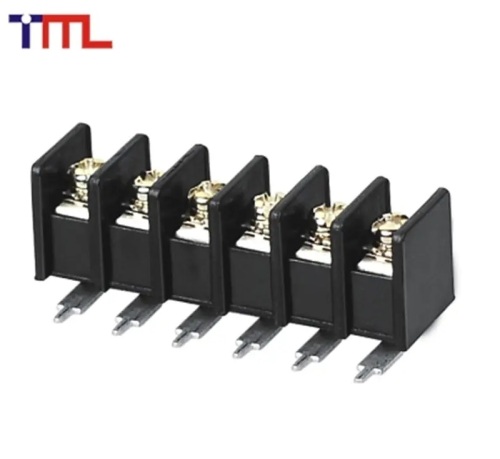
Diverse Product Range and Customization
One of the standout features of high power terminal blocks is their extensive product range. Companies like Curtis Industries offer a wide array of series, each tailored to meet specific industry needs. From the 71000 series to the H, BT, L, O, S, SW, and DSW series, these terminal blocks cover a broad spectrum of applications, ranging from low to high current capacities—up to 600 volts and 250 amperes. This diversity ensures that there is a terminal block suitable for virtually any industrial requirement.
Moreover, the customization options available are unparalleled. Manufacturers work closely with clients to design terminal blocks that meet precise specifications. Whether it's a unique current capacity, specific terminal variants like spring clamps or push-in terminals, or even specialized features like diode protection, these companies can deliver solutions that perfectly fit the client's needs.
Performance and Safety
When it comes to handling high currents and voltages, performance and safety are paramount. High power terminal blocks are constructed using top-tier materials to ensure reliability and durability. For instance, the L and O series from one manufacturer utilize electrolytic pure copper for their connections, providing 100% conductivity. This not only ensures efficient power transfer but also minimizes energy loss and heat generation.
Safety is another key aspect. Many terminal blocks are designed with finger-safe features and are grounded through DIN rails, reducing the risk of electrical accidents. Additionally, these products often come with certifications from recognized bodies like UL and CSA, ensuring they meet stringent industry standards. This combination of high performance and robust safety features makes high power terminal blocks a preferred choice for critical applications.
Flexibility and Ease of Installation
The design of high power terminal blocks prioritizes flexibility and ease of installation. For example, the SW and DSW series feature a snap-in design that allows for quick and hassle-free mounting on DIN rails. This not only saves time during installation but also simplifies maintenance and replacement processes.
Companies like Phoenix Contact further enhance this flexibility by offering multiple installation options, including DIN rail and panel mounting. This versatility ensures that terminal blocks can be seamlessly integrated into various industrial setups, whether in control cabinets, power distribution systems, or automation panels.
Versatility Across Applications
High power terminal blocks are incredibly versatile, finding applications across a broad spectrum of industries. They are commonly used in power distribution systems, where their ability to handle high currents and voltages is crucial. For instance, the H and BT series are designed for high power applications, supporting up to 75 amperes at 600 volts, making them ideal for heavy-duty industrial use.
In the realm of industrial automation, these terminal blocks play a vital role in connecting sensors, actuators, and control systems. Their compact design and high-density configurations allow for efficient use of space, which is essential in crowded control cabinets. Additionally, some terminal blocks come with built-in features like disconnect switches and diode protection, further enhancing their functionality and reliability.
Innovation and Functionality
Beyond their basic connection capabilities, high power terminal blocks offer a range of innovative features. For example, multi-level terminal blocks from Connectwell provide solutions for complex wiring needs, such as three-wire sensor wiring and grounding. These blocks can also be configured to include additional features like fuses and diodes, which protect against overloads and reverse voltage.
Such innovations not only make terminal blocks more functional but also contribute to the overall efficiency and reliability of electrical systems. By integrating these advanced features, manufacturers can offer solutions that go beyond simple connectivity, addressing the broader needs of modern industrial applications.
Customization Driven by Industry Needs
The success of high power terminal blocks lies in their ability to meet specific industry demands. Manufacturers collaborate closely with clients to understand their unique requirements and deliver customized solutions. This approach ensures that each terminal block is designed to perform optimally in its intended application, whether it's in a power plant, a manufacturing facility, or a renewable energy installation.
By adhering to industry standards and certifications, these companies ensure that their products are not only reliable but also compliant with regulatory requirements. This level of customization and attention to detail has made high power terminal blocks an indispensable component in the world of industrial connectivity.
Conclusion
Customized high power terminal blocks represent a significant advancement in the field of industrial electrical connections. Their diverse product range, high performance, safety features, ease of installation, and versatility across applications make them a valuable asset for modern industries. As technology continues to evolve, these terminal blocks will undoubtedly play a crucial role in powering the future of industrial automation and power distribution.
By offering innovative solutions that meet specific industry needs, manufacturers are setting new standards for reliability, efficiency, and functionality. Whether it's a small-scale automation project or a large-scale power distribution system, high power terminal blocks are proving to be an essential component, driving the progress of industrial connectivity forward.