

When a crimped Terminal Block is inserted into a Chinese connector with difficulty, the resistance felt is the insertion force between the terminals. Terminal block is an accessory product used to realize electrical connection, which is industrially divided into the category of connectors. UK terminals are suitable for the interconnection of a large number of wires. In the power industry, there are special terminal blocks and terminal boxes, all of which are terminal blocks, single-layer, double-layer, current, voltage, ordinary, breakable, etc. .
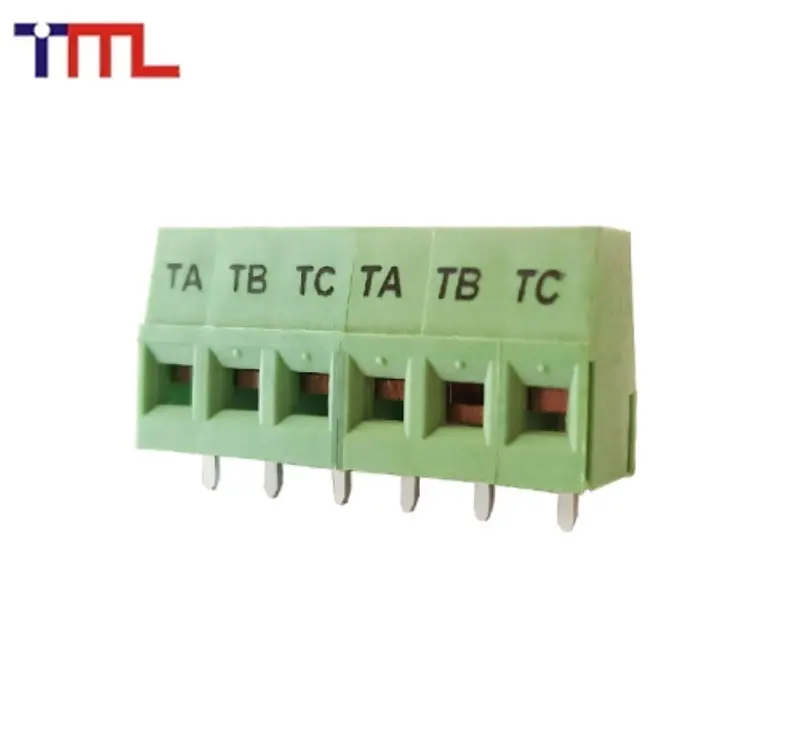
A certain crimping area is to ensure reliable contact and to ensure that sufficient current can pass. The terminal block is used to facilitate the connection of wires. It is actually a piece of metal sealed in insulating plastic. There are holes at both ends for inserting wires, and there are screws for fastening or loosening. For example, two wires, sometimes If they need to be connected, sometimes they need to be disconnected. At this time, they can be connected with terminals, and they can be disconnected at any time without having to weld them or twist them together, which is very convenient and quick.
Terminal Retention Force
The force used to hold the terminal in place is the terminal holding force
The retention of the Terminal Connector determines the difficulty of pulling the terminal out of the connector
Terminal retention prevents terminal failure - when the terminal loosens or is pulled out of the connector under pressure
Most suppliers use spring tabs to prevent terminal blocks from failing, coming loose, or being pulled out of the connector under pressure.
Wire Pullout Force
The force required to separate the wires from the Power Connectors is the pull-out force,
The extrusion mechanism of each terminal block is designed and produced to increase the pulling force. The greater the pulling force, the better the compaction quality. The environment of the connector with potential stressors can also affect the pull force of the wire.
Synergy
The binding force is defined by each branch or matching branches. Mating force is the force required to connect or mate a male terminal and a female terminal to a fully mated state.
Pull out force
Pull-out force is the force required to separate two terminals
vertical force
Vertical force is the pressure applied perpendicularly to a terminal, or continuous force on an electrical contact. Vertical force is an important mechanical characteristic because sufficient vertical force ensures that corrosive gases cannot enter the terminal connection area and affect the performance of the circuit.
Durability
Durability refers to the number of times a system terminal block can be mated and unmated before performance degradation issues arise. It is also a process that affects the coating material, coating thickness, use, wear, cracking and other functions.